
Custom CMS Websites explained by expert web dev - Alex from Croissant and Baguette
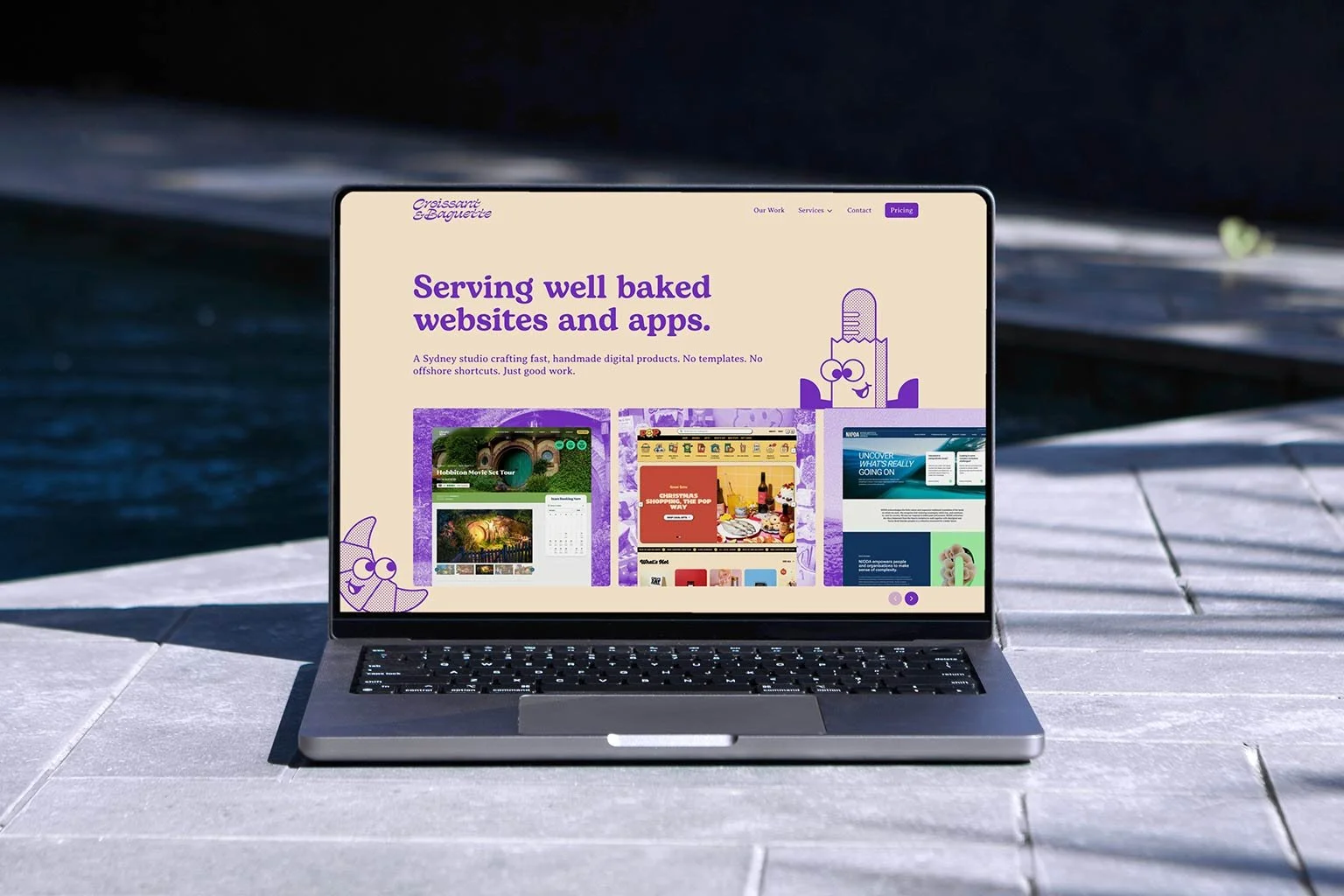
When it comes to websites, there’s no one-size-fits-all solution. Custom CMS platforms can sound a little mysterious, especially compared with more familiar options like WordPress. That’s why I wanted to sit down and get the insights straight from the source.
I’ve worked with Alex on several projects now and the results speak for themselves. His approach is built entirely around custom CMS solutions, and the impact on performance, flexibility and reliability is massive. But explaining the benefits of a fully tailored system isn’t always easy; it’s one of those things you have to hear directly from the horse’s mouth.
In this interview, we dive into why Alex built his business around custom CMS technology, the advantages it offers over off-the-shelf platforms, and how it transforms the way businesses can manage, scale, and grow their online presence.
Q: What made you move away from building websites in WordPress and towards custom-built or static websites?
Alex:
I did develop in WordPress in the past. WordPress was originally created with editorial use in mind, so it was really designed for blogs, articles and content publishing.
At the time when it was developed, it was actually very clever because it allowed other developers to create plugins and extend its functionality easily. But that approach dates back a long way; more like 20 years and things have changed a lot since then.
To explain simply, WordPress requires a database to work. When someone visits a WordPress website, the site asks the database for the content, retrieves it, and then displays it to the user.
That setup is overkill for about 90% of people using WordPress. Because it needs a database, someone has to host that database somewhere physically, whether that’s Sydney, Paris or New York and that means that there’s constant communication happening between the website and the database as data is passed from one to the other.
Another issue is that WordPress powers 4 in 10 of all websites. Just like Windows, when something is widely used, it becomes the biggest target for hackers. They look for vulnerabilities in the most common systems.
Many of my WordPress clients who weren't keeping up with updates were hacked. When that happens, hackers can take down your site, lock you out, or demand money to restore access. That vulnerability exists largely because of the database structure, there is something there to attack.
The third major problem is maintenance. Because WordPress is such a big target, there are constant updates to fix vulnerabilities and improve functionality. As a business owner, you either have to pay someone to handle updates or do them yourself. If you don’t update, you increase your risk of being hacked. If you do update, you can sometimes break the website.
Plugins also add another layer of risk. They also need updates, and sometimes developers abandon them. An update to WordPress can break a plugin, which makes the whole system fragile.
Most companies that switch away from WordPress do so because they were hacked or because the backend becomes slow, cluttered, and full of update notifications, with things breaking frequently. Speed is also an issue, since plugins and database calls slow everything down.
What we do instead is build static websites. That means there is no database. Everything is packaged directly into the page, so when someone visits, the content is already there, it doesn’t need to be retrieved.
The attack surface is dramatically smaller because there's no server-side application or database to exploit. There’s also almost no maintenance, because the site is built using standard web languages like HTML, CSS and JavaScript.
It also gives us complete flexibility in design, because everything is coded from scratch instead of trying to force designs into drag-and-drop builders.
Another advantage is cost. Hosting can be extremely cheap, and the biggest plus - without the need for updates you don’t need to keep paying developers just to maintain the system.
Q: How much control do clients have in the backend of your websites? Can they edit and build pages themselves?
Alex:
We use a CMS called CloudCannon. It allows drag-and-drop functionality, but only with pre-built components that were designed and coded specifically for that project.
So clients can start with a blank page and add sections like hero banners, text blocks, or image sections, but they’re using components that follow the design language. They can rearrange layouts and choose options we’ve built in, like switching image positions or text alignment, but they can’t completely break the design.
This gives the client flexibility while preserving brand consistency.
Q: How does this compare to platforms like Squarespace?
Alex:
Squarespace is good for small websites, like five-page service sites. It works well for that use case.
But you don’t own the platform. If something changes with the company or pricing, you don’t control it. And for larger or more complex projects, it’s not suitable.
My services aren’t really aimed at small five-page websites; they’re more suited to larger or more complex builds.
Q: How has AI affected your work and pricing?
Alex:
AI helps me work much faster, which means I can sometimes reduce costs because the time required is lower. It’s mainly about efficiency.
Q: Why don’t platforms like Shopify get hacked as often as WordPress?
Alex:
Shopify is self-contained. They control the database, hosting, security and updates themselves, so they manage the risks centrally.
With WordPress, you install it yourself and are responsible for hosting, updates and security. That’s a big difference.
That said, with Shopify you still don’t truly own the platform and you’re dependent on their pricing and policies.
Q: Is a custom CMS beneficial for SEO?
Alex:
Yes, speed in particular is a major factor.
In WordPress, plugins add computational weight. Plugins are designed to work for millions of websites, so they load many features that aren’t even used on your site, which slows things down.
Another issue is media. Clients often upload very large images or videos without optimization. WordPress will display them at full size, which slows page load times.
Anything over 2.5 seconds to load is considered slow. On fast home internet everything feels fine, but users in slower areas experience delays.
Google considers speed as one of several ranking factors. If two sites are similar in reputation but one is faster, Google will usually rank the faster one higher.
Other factors include accessibility, page structure, titles, headings and technical optimization. These are things clients don’t see but are important.
With our static sites, we automate many optimizations:
Images are resized and compressed automatically
Files are converted to efficient formats like WebP
SEO metadata can be generated automatically but still overridden
Performance is optimised to achieve very high scores in Google’s testing tools
Most of our sites load in under one second. For example, the NIODA site dropped from around 20 seconds to about one second, which dramatically improved user experience.
Q: Let's now chat through a project we have worked on recently together… Cheeky Kiwi - It would be great to discuss the results that have been seen from their new website makeover.
Zoe:
We joined this project to elevate the user experience and give the interface a fresh, intuitive makeover. With their new brand crafted by Croft Creative Studio, our goal was to bring that personality to life online. We implemented a crisp type system, infused the site with vibrant imagery and layered in their playful new color palette to reflect the approachable, fun Kiwi spirit. The design highlights what makes Cheeky Kiwi special: personalised service, expert guides, scenic and well-organised tours and a seamless, fast booking experience, all while keeping the experience light, authentic and full of adventure. The end result is a homepage that instantly feels like Cheeky Kiwi: welcoming, lively and ready to spark wanderlust.
Alex:
From the development side of things They were previously using WordPress with a booking plugin that embedded their booking system - Resdy through an iframe. The booking pages could sometimes take up to 30 seconds to load, mainly because the API itself is slow.
We rebuilt the system as a custom application and optimized delivery using Cloudflare’s global network. That means users load the site from the nearest server: New York, Paris, Canberra, wherever they are, which makes it much faster worldwide.
We also optimised how booking data loads. The page itself loads immediately, and availability data streams in afterward. We even preload some data when a user hovers over a tour link so it appears instantly when clicked.
The result was:
A large improvement in load times
There is a 26% conversion rate increase per user and 37% conversion rate increase per session.
A 15% increase in tours per purchase (1.03 to 1.18)
A significant improvement in conversion rate
The faster, smoother experience makes a real difference in how people interact with the site.
Their new website basically paid for itself in about two weeks just from the increase in conversions. For businesses doing around a million dollars a year or more, it really matters. If your website goes down and people can’t book or buy, the money you lose is huge. That’s why infrastructure and reliability matter so much at that level.
Q: Another thing I’m curious about, your lead times are incredibly fast. You sometimes build very large websites in under a week. Why are you able to work so quickly?
Alex: First, I love what I do, so I work a lot. But also, over the years I’ve built so many websites that I know the tools inside out.
For example, I use Tailwind, which is a way of writing CSS. I know most of the classes by heart now, so when I look at a design, I already know how to build it. I can just type it out straight away. That’s really the main “secret” experience and repetition.
Zoe: So it’s really muscle memory at this point.
Alex: Exactly. And honestly, AI can’t really replace that kind of hands-on experience yet. You can’t just give a design to AI and expect it to produce something production-ready at a high standard.
Q: That’s interesting, especially with all the talk about AI building websites automatically. What do you think about tools that promise one-click builds from design files?
Alex: Some of that already exists, but in my experience it’s not there yet. I use AI a lot in my workflow, at a fairly advanced level, and even then you can’t fully trust it to do the right thing.
If you don’t know what you’re looking at, you might end up with unoptimized code, security issues, or performance problems. Sometimes it works, but sometimes it produces messy code that would cause real problems in a live environment.
For example, something as simple as something as simple as a memory leak or an infinite loop; could cost thousands in hosting fees if you didn’t catch it. A non-developer wouldn’t necessarily know that was happening.
Zoe: That’s the same with design.. AI can come up with concepts, but it’s still not great at refining, editing and making thoughtful changes. You still need the human element.
Alex: Exactly. Right now, if you rely entirely on one-click solutions, you’ll often end up with the same kinds of issues people have had with heavily templated platforms sites that break, get hacked, or don’t perform well.
Q: Do you think AI will still change the industry significantly?
Alex: Definitely. It will help and it will change things, but I think it’s being oversold right now. The costs of running AI are enormous and a lot of companies are still figuring out sustainable business models.
In the long term, I think human expertise will become more valuable for high-end work, while more basic work gets automated.
Q: Final thoughts on technology, AI and where things are heading?
Alex: AI will absolutely be part of the future, but it’s not magic. Tools are only as good as the people using them and experience still matters a lot.
Zoe: I think that’s the key point. Technology is powerful, but it doesn’t replace judgment, taste, or craft. And for creative and strategic work, those things still make all the difference.
Croissant & Baguette is a Sydney-based boutique agency that helps businesses transform and innovate through beautifully built customer-facing websites and apps, alongside smart back-end systems that streamline operations and empower teams.
LIKE THIS AND WANT MORE?
If this is the kind of content that speaks to you, follow us on Instagram. Or you can also sign up to our newsletter for weekly goodness delivered straight into your inbox. Yes, that’s right – Weekly Goodness – no-one hates SPAM email more than we do!